Trademark Class 42 covers many scientific and technological services. For software businesses, it is particularly relevant to software as a service (SaaS), online non-downloadable software, custom software development, cloud computing, website hosting, and technology consulting. It also includes certain engineering, scientific research, design, quality-control, and authentication services.
The distinction most applicants need to make is straightforward: downloadable software generally belongs in Class 9; SaaS and online non-downloadable software generally belong in Class 42. A company offering both may need to investigate both classes. The correct selection depends on what customers actually receive under the mark, not the company’s industry label.
This guide explains the major Class 42 services, how to describe software in a U.S. trademark application, when other classes matter, and what evidence can show use of a mark for a Class 42 service. For the wider system, see Trademark Classes Explained: Complete Guide to All 45 USPTO Classes.
What Is Trademark Class 42?
Trademark Class 42 is an international service class for scientific and technological services, including many software, cloud, engineering, research, and design services. The USPTO uses the Nice Classification system to organize applications. Class 42 identifies a type of service; the application still must describe the applicant’s actual services with sufficient detail. WIPO’s Class 42 notes describe its scope.
What Does Class 42 Cover?
Common areas include hosted software, development, cloud hosting, technology consulting, cybersecurity, engineering, research, design, quality control, and authentication. Each offering needs an accurate identification.
Is Class 42 for Goods or Services?
Services. Hosted software can be a Class 42 service; a downloadable application is generally a Class 9 good. A company can offer both. “Software company” does not settle the classification.
Who Actually Needs Trademark Class 42?
Start with the offering advertised under your mark. These are starting points, not final classifications:
| Business or offering | Class 42 relevance | Why |
|---|---|---|
| SaaS platform | Strongly relevant | Customers use hosted software for a specified function. |
| Online non-downloadable software | Strongly relevant | Users access the software online rather than obtain a copy. |
| Software development agency | Often relevant | It designs or develops software for clients. |
| Cloud-hosting provider | Often relevant | It hosts others’ websites, applications, or data. |
| Technology consultancy | Often relevant | The actual advice concerns technology or software. |
| AI SaaS company | Often relevant | Its AI functionality is delivered through hosted software. |
| Downloadable mobile app only | Usually Class 9 is more central | Customers obtain downloadable software; investigate any separate services. |
| Hardware manufacturer | Usually another class is more central | Computer hardware generally points to Class 9; technical services may add Class 42. |
| Marketing agency | Usually Class 35 is more central | Performing marketing for clients differs from providing marketing software. |
Trademark Class 42 Services List
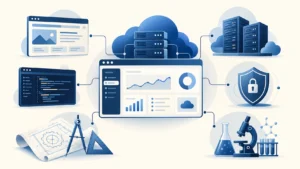
The 2026 Nice Classification notes outline the category; a USPTO filing needs the particular service.
SaaS and Online Non-Downloadable Software
SaaS, web-based applications, and temporary use of non-downloadable software fit here. A hosted inventory tool and online image editor require different descriptions of their functions.
PaaS and Application Service Providers
PaaS provides a hosted platform to develop, deploy, or operate applications. An ASP hosts applications for others. Describe the platform’s or application’s function.
Software Development and Programming
Programming, designing, developing, and maintaining software for others can be Class 42 services, distinct from selling a downloadable program.
Cloud Computing and Hosting
Cloud services and hosting others’ websites, applications, or data can fit Class 42. Hosting your own site is not a separate customer-facing hosting service.
Technology Consulting and Technical Services
Technology or software consulting, certain technical support, and cybersecurity services may fit. Specify the work: hardware installation or repair may point elsewhere.
Scientific and Engineering Services
Engineering, scientific and technological research, and certain laboratory or testing services also fit. No software product is required.
Design and Authentication Services
Industrial design, architecture, quality control, and certain authentication services fit. Specify what is designed or authenticated; “design” alone is ambiguous.
Check the USPTO Trademark ID Manual for specific identification wording; Nice headings are category guides.
Is SaaS in Trademark Class 42?
Yes. SaaS generally falls in Trademark Class 42. Users access software supplied as a service. “SaaS” alone does not explain its function.
How SaaS Should Be Described
Weak: “SaaS.”
Better structure: “Software as a service (SaaS) featuring software for [specific function].”
For project-management software, specify tasks such as assignment and tracking. These structures are illustrations, not guaranteed accepted wording. Match the service to the ID Manual; USPTO guidance calls for its function or purpose.
Is Online Non-Downloadable Software Class 42?
Generally, yes. “Providing temporary use of online non-downloadable software” signals an online service, while “web-based” can clarify delivery. The function must also be clear.
Why the Software’s Function Matters
Hosted accounting, project-management, reservation, analytics, cybersecurity, and image-editing tools have different functions. State the user’s task and, when needed, the field or content. Supplying a tool to perform an activity also differs from performing that activity for customers.
Is Software Development Trademark Class 42?
Software development for others commonly belongs in Class 42. Designing, coding, or maintaining a client’s app is a technology service; describe the work performed.
The firm’s own downloadable app may also call for Class 9. Building software internally does not itself constitute a development service for others.
Cloud Computing, Hosting and PaaS in Class 42
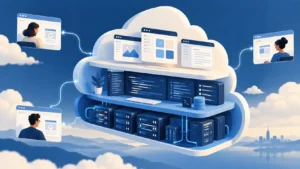
Cloud Computing
Describe what customers receive, such as a hosted software environment or storage of their electronic data. Using cloud infrastructure internally is different.
Website and Application Hosting
Hosting customers’ websites or applications fits Class 42; hosting your own site as part of another business does not establish that separate service.
Platform as a Service (PaaS)
PaaS provides a hosted platform, perhaps for developing and deploying applications. Specify the function; “PaaS” alone is unclear.
Application Service Provider (ASP)
An ASP hosts applications used remotely. Identify what they do; the best description depends on the actual offering and ID Manual wording.
Does AI Software Belong in Trademark Class 42?
The offering determines the class; “AI” alone does not. WIPO’s 2026 Class 42 list includes certain AI services, while U.S. applications need definite descriptions.
| AI offering | Class commonly investigated |
|---|---|
| Downloadable AI software or app | Class 9 |
| Online non-downloadable AI software | Class 42 |
| AI SaaS for a specified function | Class 42 |
| AI software development for clients | Class 42 |
| Certain AI technology consulting | Class 42 |
A browser-based AI tool and an installable app may need different identifications. Describe their functions, not simply “AI-powered software.”
Class 42 Trademark Description Examples
The following identification structures are educational illustrations, not text to copy into an application without checking the actual service and the current USPTO ID Manual.
| Business | Example identification structure |
|---|---|
| CRM SaaS | Software as a service (SaaS) featuring software for managing customer relationships and sales records. |
| Project-management SaaS | Providing temporary use of online non-downloadable software for assigning tasks and tracking projects. |
| AI platform | PaaS featuring computer software platforms for analyzing customer-provided data using artificial intelligence. |
| Software-development company | Design and development of computer software for others. |
| Cloud platform | Cloud computing featuring software for storing and managing electronic data. |
| Hosting company | Hosting the websites or software applications of others. |
Search the USPTO Trademark ID Manual and match the wording to your service. Using the free-form identification box can trigger an additional fee in Section 1 or 44 applications; check the current USPTO fee guidance.
What Is Not Covered by Trademark Class 42?
Class 42 is not a general container for everything a technology company does.
| Product or service | Class to investigate instead |
|---|---|
| Downloadable software or mobile app | Class 9 |
| Computer hardware | Class 9 |
| Marketing or business consulting | Class 35 |
| Retail store services, including certain online retail services | Class 35 |
| Installation or repair of computer hardware | Class 37 |
| Telecommunications or electronic transmission services | Class 38 |
| Training and education services | Class 41 |
| Medical services | Class 44 |
| Legal services | Class 45 |
A business can offer a listed activity and a separate Class 42 service. See the Nice explanatory notes.
Trademark Class 9 vs Class 42 — What’s the Difference?
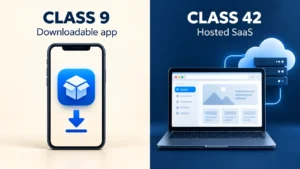
Class 9 generally addresses software goods that users download or receive in recorded form. Class 42 generally addresses hosted software and software-related services. This is the core distinction for many app companies.
| Offering | Class commonly investigated |
|---|---|
| Downloadable software | 9 |
| Downloadable mobile app | 9 |
| Recorded software | 9 |
| SaaS | 42 |
| Online non-downloadable software | 42 |
| PaaS | 42 |
| Software development for others | 42 |
| Downloadable app plus distinct SaaS offering | Potentially 9 and 42 |
A downloadable app used to access a hosted service calls for reviewing both offerings. See Trademark Class 9 Explained guide. USPTO guidance.
Class 35 vs Class 42 — What’s the Difference?
Class 35 covers advertising, marketing, business management, and certain retail and business services. Class 42 covers the technical service of providing software or technological work. Marketing consultancy for a client may point to Class 35; consulting about the design of that client’s software may point to Class 42.
A SaaS tool for customers to plan their own campaigns raises a Class 42 question; an agency planning campaigns for clients raises a Class 35 question. An online software retailer may provide Class 35 retail services. See Trademark Class 35 Explained. The USPTO cautions against claiming an underlying business service when the applicant only supplies a tool.
Does a Software Company Need Both Class 9 and Class 42?
Sometimes. Map each distinct offering before deciding:
- Downloadable app only: Class 9 is often the focus.
- SaaS only: Class 42 is often the focus.
- Downloadable app and SaaS platform: Classes 9 and 42 may both be relevant.
- SaaS and custom software development: Both services may fit Class 42, but should be separately and accurately described where appropriate.
- SaaS and marketing consulting: Class 42 and Class 35 may both be relevant if the company actually provides both services under the mark.
One application can cover multiple classes, with fees per class. Include supportable offerings, not speculative classes. See How to Choose the Right Trademark Class and Multiple Trademark Classes. USPTO TMEP.
Trademark Class 42 Examples by Business Type
| Business | Class 42 relevance |
|---|---|
| SaaS startup | Strong if users access hosted software; describe its function. |
| AI SaaS company | Often relevant for hosted AI functionality; downloadable products may add Class 9. |
| Web-development agency | Relevant when it designs or develops websites for clients. |
| Software-development company | Relevant for development services supplied to others. |
| Cloud-hosting company | Relevant for customer-facing hosting or cloud services. |
| Cybersecurity SaaS | Relevant for hosted security software; describe what it does. |
| Hardware-only manufacturer | Usually investigate the hardware’s goods class first. |
| Marketing consultancy | Usually investigate Class 35 for the actual consulting service. |
| Online training platform | Training may point to Class 41; separately offered hosted software may point to Class 42. |
How to Choose the Correct Class 42 Services

Step 1 — Identify What Customers Actually Receive
List the downloadable products, hosted software, and work performed for customers under the mark.
Step 2 — Determine Whether the Software Is Downloadable or Hosted
Determine whether customers download software, access it online, or both.
Step 3 — Describe What the Software Actually Does
Complete: “Customers use our hosted software to ___.” Name the task, such as scheduling appointments.
Step 4 — Separate Technology Services From Business Services
A payroll tool differs from performing payroll administration. Identify which activity you provide.
Step 5 — Search the USPTO Trademark ID Manual
Search the ID Manual by function; check the wording, class, and notes.
Step 6 — Check Whether Multiple Classes Apply
Review separate app, SaaS, consulting, retail, and training offerings against the filing basis.
Step 7 — Review the Identification Before Filing
Confirm the wording and filing basis. Later amendments face scope limits. A Trademark Class Finder or professional review can help; EagleMarkUSA assists with classification and filing options.
Class 42 Specimen Examples
For a U.S. use-based application, the specimen should directly connect the mark to the claimed service. A SaaS landing page explaining the tool, an access page, or a contextualized sign-in screen may work. A sign-in screen alone is not automatically sufficient.
A logo alone, generic homepage, “coming soon” page, or mockup does not show actual use for the specified service. A downloadable-app page may not show SaaS. Webpage specimens need a URL and access or print date; intent-to-use applicants submit specimens at the appropriate use stage. See USPTO guidance and the TMEP.
Common Trademark Class 42 Mistakes
- Putting downloadable software only in Class 42. Check Class 9 for the downloadable good.
- Calling every technology business Class 42. Classify each actual product or service, including hardware, telecom, retail, and training.
- Writing only “SaaS.” Specify the software’s function or purpose.
- Using a vague function. “Software for businesses” may not tell the USPTO what users do with it.
- Ignoring Class 9. Review any downloadable app offered alongside a hosted platform.
- Confusing business and technology consulting. State whether you advise on marketing operations, software systems, or both.
- Submitting a weak service specimen. Show the mark associated with the claimed, actually offered service.
- Copying another company’s identification. Its wording may describe a different delivery model or function and may not fit your application.
Can You Add Class 42 After Filing?
It depends on the scope of the original identification and the filing basis. In certain U.S. applications, reclassification or adding a class can be possible if the goods or services were already encompassed by the original wording and other requirements, including fees, are met. An amendment cannot generally broaden a specific identification to add a new, unrelated service. Madrid Protocol applications have different classification restrictions. Read Can You Add a Trademark Class After Filing? before relying on an amendment strategy. USPTO TMEP amendment guidance.
Can Similar Software Trademarks Exist in Classes 9 and 42?
Different class numbers do not automatically make similar marks safe to use. Downloadable software and a related hosted platform may be closely related offerings, and the USPTO considers relevant goods, services, customers, and trade channels in a likelihood-of-confusion analysis. A search should look beyond your proposed class. See Can the Same Trademark Be Registered in Different Classes? USPTO guidance on coordinated classes in searches.
Frequently Asked Questions About Trademark Class 42
What is Trademark Class 42?
Class 42 is the Nice Classification service class for many scientific and technological services. It includes SaaS, online non-downloadable software, software development, cloud hosting, engineering, research, and certain design services. The USPTO requires applicants to identify the particular service they offer; “Class 42” alone is not a description of that service.
What services are included in Class 42?
Examples include hosted software, programming and software development for others, technological consulting, website hosting, engineering, and scientific research. Class 42 also includes certain design, quality-control, and authentication services. The exact classification depends on the particular service and how the USPTO describes it in the current ID Manual.
Is SaaS Class 42?
Generally, yes. Software as a service involves customers using software that the provider makes available as a service rather than receiving the program as a downloadable good. The application should specify the software’s function, such as project tracking or image editing. A company with a downloadable companion app should also investigate Class 9.
Is online non-downloadable software Class 42?
Generally, yes. Providing temporary use of online non-downloadable software is commonly identified in Class 42. Describe the activity the user performs and, where needed, the field or content. “Non-downloadable software” alone may be too vague for a U.S. application because it does not explain the software’s purpose.
Is software development Class 42?
Software design, programming, and development for others commonly fall in Class 42. A company that builds custom software for clients may investigate this class. Developing your own software internally is different from providing development services to others; a downloadable product offered under the mark may instead require Class 9 consideration.
Is cloud computing Class 42?
Many customer-facing cloud computing and hosting services fall in Class 42. Explain what customers receive, such as hosting their websites or data or access to hosted software. Merely using cloud infrastructure to run your own business does not automatically mean you offer a separate Class 42 cloud service.
Is PaaS Class 42?
PaaS generally points to Class 42 when a company provides customers with a hosted software platform. A USPTO identification should explain what the platform enables, rather than just say “PaaS.” The specific service, including any downloadable software offered separately, determines which class or classes to investigate.
Is AI software Class 42?
Hosted, online, non-downloadable AI software and certain AI technology services commonly point to Class 42. Downloadable AI software generally points to Class 9. Describe the software’s function and delivery method. A company providing consulting, development, and a software product may need to assess each offering separately.
What is the difference between Class 9 and Class 42?
Class 9 generally covers downloadable or recorded software goods. Class 42 generally covers hosted software and other technology services, including SaaS and software development for others. Both can matter to one company if it offers a downloadable app and a distinct hosted platform. The offerings, not the company’s label, control the analysis.
Can a software company need both Class 9 and Class 42?
Yes. A business might offer a downloadable mobile app and an online SaaS service under the same mark. If both are accurately identified and supported by the filing basis, a multiple-class application may be appropriate. The application requirements and fees apply to each included class; adding classes without corresponding offerings is not useful.
How should SaaS be described in a trademark application?
State that the applicant provides SaaS or temporary use of online non-downloadable software and identify the function. For instance, the structure “SaaS featuring software for [specific function]” prompts a precise description. Verify a suitable entry in the current USPTO Trademark ID Manual and ensure the wording matches the service actually offered.
What specimen can be used for Class 42 services?
For a use-based claim, a webpage or advertisement that clearly associates the mark with the identified service can be a service specimen. A SaaS page describing the hosted tool or an appropriately contextualized access screen may work. The evidence must reflect actual use, and webpage specimens need a URL and access or print date. A logo alone or a mockup is insufficient.
Conclusion
Class 42 is central to SaaS, hosted software, custom development, and cloud services. Downloadable software generally points to Class 9. A business offering both may need both classes; separate marketing or training services may raise others.
Start with what customers receive. Describe hosted software’s function and check the current USPTO ID Manual. An industry label cannot replace that analysis.
Not Sure Whether Your Software Business Needs Class 42?
Contact EagleMarkUSA for assistance reviewing your U.S. trademark classification and filing options. Explore EagleMarkUSA Trademark Registration Services to plan an application that accurately reflects your goods and services. This guide is general educational information, not legal advice, and no particular classification or USPTO outcome is guaranteed.

Pingback: Trademark Classes: Complete USPTO Guide to All 45 Classes (2026)
Pingback: Trademark Class 9 Explained: Software, Electronics & Technology Goods
Pingback: Trademark Class 35 Explained: Advertising, Business & Retail Services
Pingback: How to Submit a Trademark Specimen Correctly
Pingback: Trademark Class 25 Explained: Clothing, Apparel & Footwear
Pingback: Trademark Statement of Use: How to File, Fees & Deadlines
Pingback: How Much Does It Cost to Renew a Trademark in 2026?