

Trademark Class 35 covers certain services involving advertising, marketing, business management and administration, retail and wholesale stores, recruitment, and office functions. It is often relevant to agencies, consultants, recruiters, and retailers. But simply operating a business or selling products does not automatically mean you need Class 35.
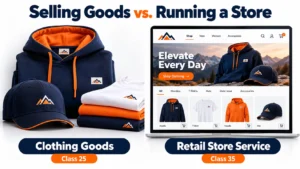
The question is what your mark identifies. Branded T-shirts are generally Class 25 goods; an online clothing store may also provide a Class 35 retail service, even when selling its own products.
This guide covers Class 35 services, online retail, application descriptions, and specimens. Compare other categories in Trademark Classes Explained: Complete Guide to All 45 USPTO Classes.
What Is Trademark Class 35?
Trademark Class 35 is the Nice Classification category for advertising, marketing, business management and administrative services, and certain retail, wholesale, recruitment, and office services. The USPTO uses it to organize services identified in trademark applications. It is not a catch-all class for any company that earns revenue. WIPO Nice Classification, Class 35 (2026)
What Does Class 35 Cover?
The groups include advertising; business management; retail and wholesale; recruitment; and office functions. The USPTO needs the particular service, not “business services.”
Is Class 35 for Goods or Services?
Services. Shirts and cosmetics are goods; running a client’s advertising campaign or a retail store are services. Each claimed offering needs its own accurate identification. USPTO goods and services guidance
Who Actually Needs Trademark Class 35?
Think about what customers encounter under your mark, not your company’s industry label.
| Business type | Class 35 relevance | Why |
|---|---|---|
| Marketing or advertising agency | Strongly relevant to investigate | It may provide campaigns, marketing, or promotion for clients. |
| Recruitment company | Strongly relevant to investigate | Employment placement and personnel recruiting are Class 35 activities. |
| Business consultant | May be relevant | Business management or organization consulting can fit; technical or legal consulting may not. |
| Online retailer | May be relevant | A genuine online retail store service can be Class 35; the website’s existence alone is insufficient. |
| Clothing brand selling its own products | Not automatic | Clothing goods are generally Class 25; a distinct retail store service may also qualify. |
| SaaS company | Usually another class is central | Hosted software is commonly Class 42; separate marketing or retail services may warrant Class 35. |
| Restaurant | Usually another class is central | Restaurant services are generally Class 43; a separate qualifying Class 35 activity needs its own analysis. |
These are starting points; exact services determine the filing.
Trademark Class 35 Services List

Verify exact terms in the USPTO Trademark ID Manual.
Advertising and Marketing Services
Advertising agency work, online advertising, marketing for others, public relations, and market research can fit. Promoting your own products alone does not create a separate advertising service.
Retail and Wholesale Services
Retail and wholesale stores, online stores, and catalog services can fit. Identify the retail activity and the goods featured.
Business Management and Consulting
Business management, organization consulting, and business research may fit. Financial, technical, and legal advice can fall elsewhere.
Human Resources and Recruitment
Employment agencies, recruiting, personnel placement, and personnel management are examples.
Office and Administrative Services
Bookkeeping, payroll preparation, and clerical work are examples. WIPO Class 35 explanatory note
Does Selling Products Mean You Need Class 35?
No, not automatically. Branded T-shirts are Class 25 goods. “Sales of T-shirts” is not an appropriate stand-alone Class 35 identification: the USPTO does not treat the mere sale of one’s own goods as a separate service. USPTO TMEP §§1402.11, 1402.11(a)(vi)
Yet a store can qualify while selling only its own goods. The Trademark Trial and Appeal Board recognizes online retail and mail-order services featuring a seller’s products; one mark may identify both the goods and store. The retail activity and mark use must support the claim. USPTO TMEP §1301.01 · TTAB decision
Does an Online Store or E-Commerce Business Need Class 35?
“E-commerce” describes a sales channel, not a definitive trademark classification. Consider these scenarios.
Selling Your Own Products Online
A product page points first to the relevant goods class. A checkout button alone does not settle whether a store service exists. An actual store may warrant Class 35, even for its own goods.
Online Retail Store Services
An online store may provide Class 35 services. Specify the featured goods, such as “online retail store services featuring clothing,” and show mark use for the service.
Marketplace or Multi-Brand Retail Business
A marketplace or multi-brand boutique should investigate Class 35. Marketplace and retail-store identifications differ; search the actual activity in the ID Manual. Own-brand products may need goods classes too.
How Should Retail Services Be Described in Class 35?
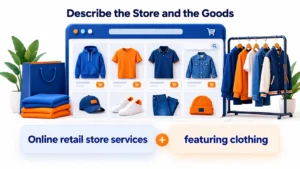
“Retail services” alone is too indefinite under USPTO practice. It could describe store operations, marketing, advertising, or another retail-related activity. The identification should state the retail format and the type or field of goods offered. USPTO TMEP §1402.11(a)(vi)
A useful structure is type of retail service + goods featured. “Online retail store services featuring clothing” illustrates the idea. Search the current Trademark ID Manual for wording that reflects your service. Do not list goods your store does not feature or substitute “sales” for the retail service.
The goods named after “featuring” describe the store service; they do not automatically create separate goods claims.
Class 35 Trademark Description Examples
These are identification concepts, not universal application text. Match your actual service to current ID Manual wording.
| Business | Example identification concept |
|---|---|
| Marketing agency | Marketing services provided for businesses in a specified field. |
| Clothing retailer | Online retail store services featuring clothing. |
| Recruitment firm | Employment recruiting or personnel placement services. |
| Business consultant | Business management consulting in the relevant operational area. |
| Wholesale distributor | Wholesale store or distributorship services featuring specified goods. |
| Online retailer | Online retail store services featuring the actual product categories offered. |
A consultant developing advertising strategies and a developer offering marketing SaaS provide different services; the latter should investigate Class 42.
What Is Not Covered by Trademark Class 35?
Class 35 is broad, but “business-related” is not enough. The actual product or activity controls the class.
| Activity or product | Class to investigate instead |
|---|---|
| Clothing goods | 25 |
| Downloadable software goods | 9 |
| Hosted SaaS services | 42 |
| Financial advisory or other financial services | 36 |
| Education and training services | 41 |
| Telecommunications services | 38 |
| Restaurant services | 43 |
| Legal services | 45 |
An accounting software company could offer downloadable software, hosted software, and bookkeeping. Describe each offering accurately; Class 35 does not cover everything a company does. USPTO goods and services guidance
Class 25 vs Class 35: What’s the Difference?
Class 25
Class 25 concerns clothing, footwear, and headwear goods, such as branded shirts, sneakers, and hats. See Trademark Class 25 Explained.
Class 35
Class 35 can concern retail store services featuring clothing. A fashion brand may use one mark for its shirts and its genuine store service, but selling shirts does not automatically establish both claims. Assess the identifications and mark use separately.
Class 35 vs Class 42: What’s the Difference?
Class 35
Marketing consultancy, business management consulting, advertising, and retail services are examples worth investigating in Class 35.
Class 42
Class 42 covers certain technology services, including properly identified non-downloadable software. A marketing adviser also offering a hosted analytics platform may investigate both classes. Using software internally does not itself make the agency a SaaS provider. See our Trademark Class 42 guide.
Does Your Business Need Class 35 Plus Another Trademark Class?
Only when the mark identifies distinct goods or services in the relevant classes. Consider the possible combinations:
- Clothing brand: Class 25 for its clothing; Class 35 if it also provides a qualifying retail store service under the mark.
- Cosmetics brand: Class 3 for cosmetics; potentially Class 35 for a separately claimed retail service.
- SaaS company: Class 42 for hosted software or Class 9 for downloadable software; potentially Class 35 for an actual marketing or retail service.
- Jewelry retailer: Class 14 if it markets its own jewelry under the mark; potentially Class 35 for its store service.
- Marketing software company: Class 42 for SaaS and Class 35 if it also provides marketing services for clients.
The number of classes follows the offerings, not the number of revenue streams. Each class can add filing costs and separate evidentiary requirements.
Trademark Class 35 Examples by Business Type
| Business | Class 35 relevance |
|---|---|
| Advertising agency | Strong: identify the particular advertising services offered to clients. |
| Marketing consultancy | Strong when it provides marketing advice for others. |
| HR or recruiting company | Strong for its actual personnel placement or recruiting service. |
| Online retailer | Possible for a genuine online retail store service; specify featured goods. |
| Clothing manufacturer | Not automatic from manufacturing or selling clothing; goods are generally Class 25. |
| SaaS startup | Not automatic from a subscription model; hosted software is commonly Class 42. |
| Restaurant | Usually Class 43 for the restaurant service; Class 35 requires another actual service. |
| Financial adviser | Usually Class 36 for financial advice; business management advice is a different question. |
How to Choose the Correct Class 35 Services
Step 1: Identify What Customers Pay You to Do
Describe the activity in ordinary words. Do they buy a product, receive advice, shop through a store service, or use software you host? Payment is a helpful clue, but some services benefit consumers without a separate service fee.
Step 2: Determine Whether It Is a Business, Advertising, or Retail Service
Ask whether the work involves advertising or managing commercial operations for others, recruitment, office functions, or a genuine retail or wholesale service.
Step 3: Separate Core Goods From Services
List the goods and the claimed service in separate rows. A branded shirt and a branded clothing store are different identifications even if one mark appears on both.
Step 4: Search the USPTO Trademark ID Manual
Search terms such as “marketing,” “employment recruiting,” or “online retail store services.” Read the full entry, its class, and any required details. Select wording that accurately describes the offering.
Step 5: Check Whether Other Classes Apply
Assess additional goods or services separately. Do not add Class 35 just because a competitor filed there or because it sounds broadly useful.
Step 6: Review Before Filing
Confirm the service is real or supported by a qualifying intent-to-use basis, that your identification is specific, and that the mark will identify that service. Goods and services generally cannot be broadened after filing. EagleMarkUSA can help you review the practical filing options. USPTO identification guidance
Class 35 Specimen Examples
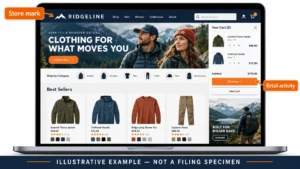
For a use-in-commerce application, a service-mark specimen should show the mark directly associated with the claimed service as actually offered. Depending on the service, a webpage, advertisement, brochure, store sign, or promotional material may work. A logo alone, a mockup, or a page that only displays products without demonstrating the claimed service may be insufficient.
For a webpage specimen, include its URL and the date it was accessed or printed, either on the capture or in the application’s designated fields. Intent-to-use applicants generally submit a specimen later, with an allegation of use; foreign and Madrid filing bases have different initial specimen rules. Follow the USPTO’s current instructions for your filing basis. USPTO specimen guidance
How Much Does a Class 35 Trademark Application Cost?
As of 2026, the USPTO base electronic filing fee is $350 per class for a qualifying Section 1 or Section 44 application. An application covering Class 35 and one other class would have at least two base class fees. Additional fees can apply: using the free-form identification box instead of selecting ID Manual entries within Trademark Center carries a $200 fee per affected class, and other fees may apply for missing information or lengthy free-form wording. Later intent-to-use filings may have their own fees. Check the current USPTO fee schedule before filing. These are USPTO fees, separate from any professional service charges.
Can You Add Class 35 After Filing?
Sometimes, but not to introduce an entirely new service outside the original identification. A Section 1 or 44 application may permit an added class for an item already described and properly classified there, with applicable fees. An application that originally named only shirts generally cannot be expanded to include retail store services by paying a Class 35 fee. Section 66(a) Madrid applications have stricter class rules. See Can You Add a Trademark Class After Filing? USPTO TMEP §1403.02
Can Similar Trademarks Exist in Different Classes?
Potentially, but different class numbers do not eliminate conflicts. The USPTO examines the marks and whether the identified goods or services are related in ways likely to confuse consumers. Clothing and clothing retail services, for example, can be related despite being in Classes 25 and 35. Search connected classes rather than only your proposed class. See Can the Same Trademark Be Registered in Different Classes? USPTO coordinated-classes guidance
Common Trademark Class 35 Mistakes
Mistake 1: Assuming Every Online Seller Needs Class 35
An online checkout does not determine whether the mark identifies a retail service. Assess the store activity and mark use.
Mistake 2: Treating Class 35 as a Catch-All Business Class
Restaurants, software platforms, legal services, and financial advisers have other primary classes. Name your service before selecting a class.
Mistake 3: Using “Retail Services” Alone
The USPTO considers that phrase indefinite. Specify the format and the goods featured by a store service.
Mistake 4: Confusing Goods With Retail Services
“Online retail store services featuring jewelry” identifies a store service; it does not automatically claim jewelry goods in Class 14.
Mistake 5: Choosing Unnecessary Classes
Each class has fees and application requirements. Claim services that accurately reflect a present activity or qualifying intent.
Mistake 6: Ignoring Related Classes
A search limited to Class 35 may miss potentially related goods marks, including marks for the products your store features.
Mistake 7: Copying Another Company’s Wording
Its identification may describe an activity you do not provide. Use the ID Manual to find wording that fits your service.
Frequently Asked Questions About Trademark Class 35
What is Trademark Class 35?
Trademark Class 35 is the international class primarily covering advertising, marketing, business management and administration, retail and wholesale store services, recruitment, and office functions. It covers specified services, not every product or every company that does business.
What is Class 35 used for?
The USPTO uses Class 35 to categorize particular commercial and administrative services in a trademark application. It also helps organize records, fees, and trademark searches. Your identification must say what service the mark actually distinguishes; writing “Class 35” alone does not define your coverage.
What services are included in Class 35?
Examples include advertising for others, marketing, public relations, business management consulting, retail store services featuring specified goods, employment recruiting, bookkeeping, and certain office functions. The exact classification and wording depend on the service. Use the USPTO Trademark ID Manual to check your identification.
Is marketing Class 35?
Marketing services provided to clients are commonly in Class 35. Merely promoting your own goods does not automatically create a separately registrable marketing service. If you also provide a software platform that customers use for marketing, the platform may require a different class, often Class 42 if hosted.
Is advertising Class 35?
Advertising agency services and many forms of advertising for others generally fall in Class 35. The details of the activity still matter. Advertising your own products is typically part of your own business and should not be confused with providing an advertising service to others.
Is e-commerce Class 35?
E-commerce is a way of conducting business, not a trademark class. A genuine online retail store service can be Class 35, while the products sold through it belong in their respective goods classes. A product page and checkout button do not alone settle whether the mark identifies a separate service.
Are online retail services Class 35?
Properly identified online retail store services generally fall in Class 35. Specify the type of store activity and the goods featured, such as clothing. A store can feature its own goods, third-party goods, or both; the actual retail service and mark use must support the claim.
Does selling products mean I need Class 35?
No. Identify your goods in their proper classes first. A separate Class 35 claim may be appropriate if you also provide a genuine retail store service under the mark. The USPTO does not accept a bare identification of “sales” of your own goods as a retail service.
What is the difference between Class 25 and Class 35?
Class 25 covers clothing, footwear, and headwear goods. Class 35 can cover retail store services featuring clothing. A mark may identify a clothing brand, a store service, or both, but the goods and services must be accurately identified and supported under the relevant filing basis.
What is the difference between Class 35 and Class 42?
Class 35 covers business, advertising, marketing, and certain retail services. Class 42 covers certain technology and scientific services, including properly described hosted software. A marketing consultant may investigate Class 35; a separate marketing SaaS product may warrant Class 42. A company offering both may need both.
Can one trademark cover Class 35 and another class?
Yes. One mark can be included in a multiple-class application for genuine goods or services in different classes, if the application meets the requirements for each. For example, a company might claim clothing goods in Class 25 and an actual clothing retail service in Class 35. Fees are assessed per class.
Is a business consultant Class 35?
Business management or organization consulting is commonly Class 35, but the word “consultant” alone does not determine classification. A consultant advising on finances, technology, or legal matters may provide services in other classes. Describe the subject and nature of the service before choosing a class.
Not Sure Whether Class 35 Applies to Your Business?
Trademark Class 35 covers identifiable advertising, marketing, business, retail, recruitment, and administrative services. It does not automatically apply because a company sells products or has an online checkout. At the same time, a genuine store service can exist even when the retailer sells its own branded goods.
Separate your products from the services you provide. Then check the actual activity, the way customers see your mark, and the precise identification in the USPTO ID Manual. A well-chosen class number cannot fix a vague or inaccurate description; related classes may be needed for other offerings.
Contact EagleMarkUSA to discuss help reviewing your trademark classes and U.S. filing options. This article is general educational information rather than individualized legal advice, and no application is guaranteed approval.

Pingback: Trademark Classes: Complete USPTO Guide to All 45 Classes (2026)
Pingback: Trademark Class 25 Explained: Clothing, Apparel & Footwear
Pingback: Can You Add a Trademark Class After Filing an Application?
Pingback: Same Trademark in Different Classes and USPTO Rules - EagleMark USA
Pingback: Trademark Class 9 Explained: Software, Electronics & Technology Goods
Pingback: Trademark Class 42 Explained: SaaS, Software & Technology Services
Pingback: How to Submit a Trademark Specimen Correctly