
Trademark Class 9 covers many technology and scientific goods, including downloadable software and mobile apps, computer hardware, electronics, certain communications and audiovisual equipment, measuring and optical instruments, protective equipment, and downloadable digital content. The common thread is the product associated with your mark, not the fact that your company works in technology.
For software businesses, the first distinction is crucial: downloadable or recorded software generally belongs in Class 9; software accessed online without downloading, including most SaaS offerings, generally belongs in Class 42. A company may offer both under one brand.
This guide covers what to investigate, how to describe goods, and when another class may apply. See Trademark Classes Explained: Complete Guide to All 45 USPTO Classes for the wider framework.
What Is Trademark Class 9?
Trademark Class 9 is the international Nice Classification category for a wide range of scientific, electronic, information technology, audiovisual, optical, measuring, and safety-related goods. The USPTO uses this classification in U.S. trademark applications. It includes properly identified downloadable and recorded software, but it is not a general class for every digital business. WIPO Nice Classification, 13th edition, version 2026
Is Class 9 for Goods or Services?
Goods. A downloadable app is a product; temporary use of hosted software is generally a service. This affects your class, identification, and evidence of use.
Who Actually Needs Trademark Class 9?
Start with what users receive under the mark.
| Business or product | Class 9 relevance | Why |
|---|---|---|
| Downloadable mobile app | Strongly relevant | Specify the app’s function. |
| Downloadable desktop software | Strongly relevant | Software transferred for ongoing use. |
| Electronics brand | Often relevant | Devices such as headphones or cameras. |
| Computer hardware company | Often relevant | Computers and many peripherals. |
| SaaS-only platform | Usually another class is central | Hosted software commonly points to Class 42. |
| Digital publisher | May be relevant | Downloadable files can be Class 9; publishing services differ. |
| Software retailer | Not automatic | Retail services may be Class 35. |
| Online course provider | Usually another class is central | Teaching services commonly belong in Class 41. |
These are research starting points. The exact goods, services, delivery method, and mark use control the filing.
Trademark Class 9 Goods List
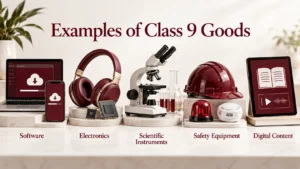
Each product needs an accurate identification in the USPTO Trademark ID Manual.
Downloadable Software and Mobile Apps
Downloadable programs, mobile apps, recorded software, firmware, and middleware can belong here when properly described. State what the program does. Software embedded in a finished product may follow that product’s class. USPTO TMEP §1402.03(d)
Computer Hardware and Electronics
Computers, monitors, keyboards, and many peripherals are examples. WIPO also lists smartwatches and activity trackers. A “smart” label alone does not move an appliance or toy to Class 9.
Telecommunications and Audiovisual Equipment
Phones, headsets, cameras, microphones, and data-processing equipment may fit. Telecommunications services are a separate Class 38 question.
Scientific and Measuring Instruments
Laboratory instruments, scales, GPS apparatus, and certain testing devices are examples. Medical apparatus may require Class 10 analysis.
Optical and Imaging Equipment
Class 9 includes magnifying glasses and photographic equipment. Under the 2026 Nice Classification, spectacles, contact lenses, and sunglasses are Class 10. Check the exact item.
Safety and Protective Equipment
Protective helmets, accident or fire protection clothing, alarms, and life-saving apparatus can be Class 9. Some sports padding belongs in Class 28.
Downloadable Digital Content
Downloadable e-books, publications, music, videos, and image files can be Class 9. Publications generally need their type and subject matter identified; printed versions belong in Class 16. Streaming services differ. USPTO TMEP §1402.03(e)
Is Software in Trademark Class 9?
Yes, when it is downloadable or recorded and identified as a good. The USPTO expects an identification to describe the software’s function or purpose and, when relevant, its field or content. Merely naming an audience, such as “software for businesses,” may not explain what it does. USPTO TMEP §1402.03(d)
Downloadable Software
Downloadable software can be transferred for ongoing use. Start with “downloadable computer software for [specific function]”. For example, an expense-tracking program should describe that function. Verify current ID Manual wording before filing.
Recorded Software
Software recorded on computer media is also a Class 9 good. Identify its function. Embedded software sold as a component may follow the finished product’s class.
Are Mobile Apps in Trademark Class 9?
Downloadable mobile applications generally fall in Class 9. An app for managing bank accounts, editing photos, making reservations, or tracking tasks can be investigated there. Describe its actual function, not merely its industry or intended user.
An app can also access a hosted service. If you separately offer non-downloadable software, investigate Class 42. List the distinct offerings your mark identifies.
Does SaaS Belong in Trademark Class 9?
Usually not when the claimed offering is temporary use of online, non-downloadable software. SaaS is commonly a Class 42 service. The Class 42 identification should say what the software does and how it is provided. The USPTO distinguishes this from downloadable or recorded software goods in Class 9. USPTO TMEP §1402.11(a)(xii)
Some businesses provide a downloadable app and a hosted platform; investigate both classes. A browser login does not make hosted software a Class 9 good. Online games can have different classification nuances.
Trademark Class 9 vs Class 42: What’s the Difference?
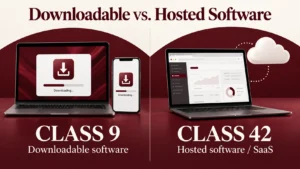
The delivery method and claimed activity usually point the way.
| Offering | Class commonly investigated |
|---|---|
| Downloadable computer software | 9 |
| Downloadable mobile application | 9 |
| Software recorded on computer media | 9 |
| SaaS providing temporary use of software | 42 |
| Online non-downloadable software | 42 |
| Downloadable app plus a distinct SaaS platform | Potentially 9 and 42 |
One mark can identify offerings in both classes. Each identification must match what customers receive. See the planned Trademark Class 42 Explained and Trademark Class 9 vs Class 42 guides.
Class 9 Trademark Description Examples
“Software” alone is generally too vague. A useful Class 9 description identifies the downloadable or recorded form and explains the function. Content or field of use may also need to be specified. These examples show a structure, not guaranteed ID Manual entries:
| Product | Example identification structure to research |
|---|---|
| Accounting software | Downloadable computer software for tracking expenses and generating financial reports. |
| Photo-editing app | Downloadable mobile applications for editing digital photographs. |
| Reservation app | Downloadable mobile applications for making restaurant reservations. |
| Database software | Downloadable computer software for organizing and searching customer records. |
| Cybersecurity software | Downloadable computer software for detecting malicious software. |
Describe the product you really provide, then search the USPTO ID Manual for a current accepted identification. The distinction between selecting an ID Manual entry and entering custom wording can also affect USPTO filing fees. Do not add functions your software does not have.
What Is Not Included in Trademark Class 9?
Many technology-related products and services fall in other classes.
| Product or service | Class to investigate instead |
|---|---|
| SaaS or online non-downloadable software | 42 |
| Printed books | 16 |
| Business consulting or qualifying retail services | 35 |
| Telecommunications services | 38 |
| Education or training services | 41 |
| Medical diagnostic or treatment devices | 10 |
| Certain sports equipment and protective padding | 28 |
These examples are not exhaustive. Under the 2026 Nice Classification, spectacles and sunglasses are Class 10 despite the optical instruments in Class 9. WIPO explanatory notes
Class 9 vs Related Trademark Classes
Class 9 vs Class 16
A downloadable e-book can be a Class 9 good; a printed book is generally a Class 16 good. Identify the format and the publication’s subject. A publisher offering both formats may investigate both classes.
Class 9 vs Class 35
Downloadable software may be a Class 9 good; a genuine online software store may provide a Class 35 service, even when selling its own products. See Trademark Class 35 Explained.
Class 9 vs Class 42
Downloadable and recorded software are goods in Class 9. Providing temporary use of non-downloadable software is commonly a Class 42 service. Analyze both if your brand identifies both offerings.
Class 9 vs Class 10
General measuring equipment may be Class 9, while medical apparatus can be Class 10. WIPO lists heart-rate monitors, spectacles, and sunglasses in Class 10.
Class 9 vs Class 28
Protective helmets can be Class 9; some sports padding and game controllers are Class 28. Check the product’s function.
WIPO places smart clothing in Class 25 despite its technology features. See Trademark Class 25 Explained.
Does a Technology Business Need Multiple Trademark Classes?
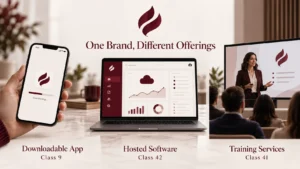
Possibly. One mark can appear on different goods or identify separate services, but each claimed offering needs support under the relevant filing basis.
- Software startup: A downloadable app and a separately offered SaaS platform may call for Classes 9 and 42.
- Electronics company: Headphones may be Class 9; a distinct retail store service under the mark may also merit Class 35.
- EdTech company: A downloadable educational app may be Class 9, while its live courses may be Class 41.
- Cybersecurity company: Downloadable protection software, hosted tools, and technology consulting could involve more than one identification, commonly spanning Classes 9 and 42.
Additional classes add filing fees. Claim actual offerings or goods and services supported by a qualifying intent-to-use basis.
Trademark Class 9 Examples by Business Type
| Business | Class 9 relevance |
|---|---|
| Mobile app company | Strong when it offers a downloadable app; specify the app’s function. |
| Desktop software developer | Strong for downloadable or recorded software products. |
| SaaS-only company | Usually Class 42 is central for the hosted service. |
| Electronics manufacturer | Often relevant for particular Class 9 electronic devices. |
| Hardware startup | Often relevant for computers or qualifying peripherals; identify the finished product. |
| Digital publisher | Possible for downloadable publications or media files. |
| Online course provider | Not automatic; instruction is usually Class 41, while a downloadable app may be Class 9. |
| Software retailer | Retail services may be Class 35; Class 9 depends on separate software goods under the mark. |
Class 9 Specimen Examples
A specimen shows real use of the mark with the goods in the application. For a use-in-commerce filing involving downloadable software, possibilities include an actual app-store listing where consumers can download the marked app, a launch screen displaying the mark in connection with the software, or a webpage that associates the mark with software available to download or buy. A product photo, label, or packaging can support appropriate hardware goods. Check out our Trademark Specimen guide. The facts and presentation matter. USPTO specimen guidance
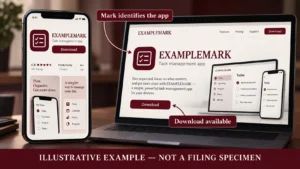
A generic homepage, “coming soon” page, standalone logo, or page advertising only a hosted service may fail for a downloadable good. Webpage specimens need a URL and access or print date. Mockups are not for actual use. Intent-to-use applicants generally submit specimens later; other filing bases differ.
Common Trademark Class 9 Mistakes
Mistake 1: Assuming All Software Is Class 9
Identify whether the software is downloadable, recorded, hosted, or a combination before selecting a class.
Mistake 2: Treating SaaS as Downloadable Software
A browser-based subscription can be a Class 42 service even though customers call it an app.
Mistake 3: Writing Only “Software”
State the format and function, plus content or field when needed. Vague wording can prompt a USPTO identification requirement.
Mistake 4: Ignoring Class 42
If customers receive a hosted platform under the mark, evaluate that service separately.
Mistake 5: Selecting Class 9 Because the Company Is “Tech”
A training platform, telecom service, or retail store is classified by its actual offering.
Mistake 6: Overlooking Other Offerings
Hardware, downloadable apps, training, and consulting may require distinct goods or service descriptions.
Mistake 7: Copying a Competitor’s Identification
Its software may do something different. Match the ID Manual language to your own product and filing basis.
Can You Add Class 9 After Filing?
Only within the scope of the original identification. An applicant may be able to add a class for goods already described but classified elsewhere, subject to the applicable requirements and fees. An application originally limited to SaaS services generally cannot be expanded after filing to add newly described downloadable software goods. Rules vary by filing basis, including Madrid applications. Read Can You Add a Trademark Class After Filing? USPTO TMEP §1403.02
Can Similar Technology Trademarks Exist in Different Classes?
Potentially, but different class numbers do not settle whether marks conflict. A Class 9 software product and a related Class 42 software service can reach similar customers. The USPTO considers the marks and relatedness of the identified goods or services when assessing likely confusion. Search beyond your proposed class. See Can the Same Trademark Be Registered in Different Classes? USPTO coordinated-class search guidance
Frequently Asked Questions About Trademark Class 9
What is Trademark Class 9?
Trademark Class 9 is an international class for specified goods, including downloadable and recorded software, computer hardware, audiovisual equipment, scientific and measuring instruments, certain safety gear, and downloadable digital files. It does not automatically cover everything a technology company sells or does.
What products are included in Class 9?
Examples include downloadable mobile apps, recorded computer software, computers and peripherals, cameras, headphones, certain laboratory instruments, protective helmets, and downloadable publications. The exact item and its purpose determine classification. Use the current USPTO Trademark ID Manual to research the description of your actual product.
Is software in Trademark Class 9?
Downloadable or recorded software generally belongs in Class 9 when properly identified. Software offered only for temporary use online is commonly a Class 42 service. Class 9 software descriptions should say whether it is downloadable or recorded and explain the software’s function.
Are mobile apps Class 9?
Downloadable mobile applications generally fall in Class 9. Describe what the app does, such as editing photos or managing reservations. If the business separately supplies hosted non-downloadable software, investigate Class 42 for that service as well.
Is SaaS Trademark Class 9?
SaaS involving temporary online access to non-downloadable software is commonly Class 42, not Class 9. A SaaS provider may also offer a separately identifiable downloadable application in Class 9. Classification depends on the goods and services claimed, not the label “software company.”
What is the difference between Class 9 and Class 42?
Class 9 covers goods such as downloadable or recorded software. Class 42 covers certain technological services, including providing temporary use of online non-downloadable software. A company that genuinely offers both may investigate both classes and identify each offering separately.
Is computer hardware Class 9?
Computers and many computer peripherals belong in Class 9. But a component or finished device can be classified according to its particular nature and purpose. Search the exact hardware product in the USPTO ID Manual instead of using “computer hardware” as a catch-all description.
Are downloadable e-books Class 9?
Downloadable electronic books can be Class 9 goods. An identification should specify the type of publication and its subject matter. Printed books generally fall under Class 16, while publishing or educational services may fall under other classes.
Can a software company need both Class 9 and Class 42?
Yes. A company may offer downloadable software goods and a distinct SaaS or non-downloadable software service under one mark. A multiple-class application can address both when the identifications and filing requirements for each are met. Merely having a downloadable login tool does not automatically establish every proposed Class 9 claim.
How should software be described in a trademark application?
Specify whether the software is downloadable or recorded, then state its function or purpose and any relevant field or content. “Downloadable computer software for editing digital photographs” illustrates the structure. Check the current USPTO ID Manual and use wording that accurately matches your product.
Can one trademark cover Class 9 and another class?
Yes. A mark may identify goods or services across multiple classes, such as downloadable software in Class 9 and a distinct hosted software service in Class 42. Each class needs an accurate identification and applicable filing requirements; USPTO filing fees are generally assessed per class.
Conclusion
Trademark Class 9 covers a broad range of scientific and technology goods. For many software founders, the clearest starting point is whether customers download a product or use software hosted online. Downloadable apps and recorded programs commonly point to Class 9; SaaS and other online non-downloadable software commonly point to Class 42. Hardware, digital publications, training, and retail services may introduce other classes.
Describe the actual product, including what software does, before choosing a class. A class number by itself does not define the goods in your application or resolve conflicts with other marks. Use the USPTO ID Manual for precise identification language, and review every good or service your mark will identify.
Not Sure Whether Your Software or Technology Product Belongs in Class 9?
Contact EagleMarkUSA for help reviewing trademark classification and U.S. filing options. This guide offers general educational information, not advice for your particular legal situation, and USPTO approval cannot be guaranteed.

Pingback: Trademark Classes: Complete USPTO Guide to All 45 Classes (2026)
Pingback: Same Trademark in Different Classes and USPTO Rules - EagleMark USA
Pingback: Trademark Class 42 Explained: SaaS, Software & Technology Services
Pingback: Can You Add a Trademark Class After Filing an Application?
Pingback: How Much Does It Cost to Trademark a Name in 2026? USPTO Fees Explained
Pingback: How Much Does It Cost to Renew a Trademark in 2026?
Pingback: How Long Does It Take to Get a Trademark? USPTO Timeline