
When your USPTO trademark application status is “Published for Opposition,” it’s a good thing, but your trademark has not yet been registered. The examining attorney has published the application, and the mark has appeared in the Trademark Official Gazette. That starts an initial 30-day period during which time a person who believes registration would be detrimental to them may file an objection or ask to be given more time to make that determination.
No one has challenged your application, so that’s not cause for worry. Once in opposition or extension, if no opposition or extension deems the application to be unpatentable, the next step is dependent on how the application was filed- a Section 1(a) use-based application will proceed to the Registration phase, and Section 1(b) intent-to-use will proceed to the Notice of Allowance phase and then into the proof of use phase. What the status means, what to look for, and where to find out what to do next. An approval to publish by the USPTO.
What Does “Published for Opposition” Mean?
When the application for publication is approved by the USPTO, the mark is published in the Trademark Official Gazette, and the USPTO will note that the mark has been published in the Official Gazette. If the USPTO approves the application for publication, the mark will be published in the Trademark Official Gazette, and the USPTO will indicate in the Gazette that the mark has been published. The publication date is before registration and is open for public review. It is not a rejection of the application nor a statement that registration has been issued. This notice of publication might show up earlier in your USPTO documents, but the actual Gazette date will be shown. USPTO: Trademark process
Is “Published for Opposition” Good News?
Generally, yes. The application has passed examination, and the examining attorney has allowed it to be published. It remains to be seen: a third party can still object to it, and the party who wants the trademark has another use-related requirement in general. View full history of the trademark.
Does “Published for Opposition” Mean My Trademark Is Approved?
It has been registered for publication, not registered. The USPTO has made up its mind to examine the mark for publication, but the public opposition stage is still to be done. The following will be based on whether someone challenges it and on the filing basis of the application. The approval for publication is therefore different from a Federal registration certificate.
Does “Published for Opposition” Mean Someone Opposed My Trademark?
No. This status opens an opportunity to object. A real challenge will need a Notice of Opposition filed with the TTAB. A request for more time is also not an opposition. If either is applicable in your situation, check out our Trademark Opposition guide. USPTO: Starting a proceeding
How Long Is the Trademark Opposition Period?
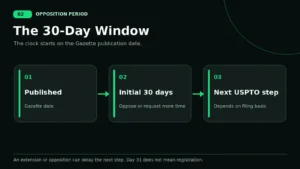
Typically, the first 30 days after the date of the Gazette. A party who considers that registration will be prejudicial to it may oppose its registration or apply for an extension of time for registration if it is eligible to do so. Access information from the date of publication, which could be different from the date of another email. On day 31, the application is not automatically registered. The U.S. Patent and Trademark Office has given it the okay to be published.
Can Someone Extend the Opposition Deadline?
Yes. The TTAB rules provide that an opposing party may seek additional time before the due date if, before that date, they wish to file an appeal. An extension does not mean that a Notice of Opposition has been filed, but rather that the next application status may be delayed if there is an extension. Extension requests carry conditions and a general cap; consult the USPTO’s tip sheet on extension requests and our Trademark Opposition guide, if applicable in your opposition.
What Happens If Nobody Opposes My Trademark?
The next stage is dependent on the filing basis displayed in the TSDR.
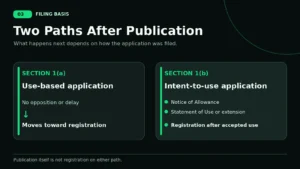
Section 1(a) — Use-Based Application
A use-based application normally moves towards registration unless there is opposition or extension from someone else. This does NOT mean that the certificate is issued at the end of day 30. Read Trademark Use in Commerce. USPTO: Section 1(a) timebomn
Section 1(b) — Intent-to-Use Application
An application that is still pending for intent-to-use continues to move forward to a Notice of Allowance (NOA). Registration must be based on an acceptable Statement of Use for qualifying use or be based on a permitted extension if use is not ready. Read Intent to Use Trademark and Trademark Statement of Use. I/ESRC: Section 1(b) timeline
Other or mixed filing bases may take other routes—be sure to read the next USPTO notice.
What is a Notice of Allowance?
A Notice of Allowance is a document issued to a Section 1(b) applicant informing them that their mark has passed publication, but they still have to provide evidence of qualifying use. This is not a registration certificate. This dates from the first six-month period for filing a Statement of Use or an eligible extension request. Please consult USPTO’s intent to use guidance and our Statement of Use guide.
What Does “Approved for Pub – Principal Register” Mean?
The examining attorney has submitted an application that has been approved for the Principal Register during this TSDR event. Published for Opposition records that the publication has actually taken place and that opposition has begun. This is not a registration for either event. This is an example history for USPTO. The USPTO history is shown here.
| TSDR wording | What it tells you |
|---|---|
| Approved for Pub – Principal Register | Cleared for forthcoming publication. |
| Published for Opposition | Appeared in the Gazette; initial opposition period underway. |
Published for Opposition vs Registered
| Status or event | Meaning |
|---|---|
| Approved for Publication | Cleared for upcoming publication. |
| Published for Opposition | Public opposition period underway. |
| Registered | Federal registration has been issued. |
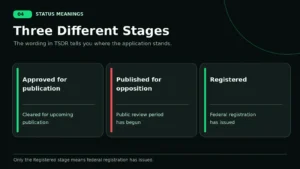
The last row represents federal registration only. When the mark registers, its electronic certificate is available in the TSDR. USPTO: Receiving registration
Published for Opposition vs Opposition Pending
The publication of a document as the public review stage does not necessarily indicate that a dispute exists. Opposition Pending means that an opposition is pending (unresolved) on the formal level. Do not make generalizations based on one status line in a case that could be more accurately summarized from the documents in the case and/or information in a TTAB proceeding. What is involved in a Trademark Opposition is explained in our Trademark Opposition guide.
Published for Opposition vs Notice of Allowance
The mark is placed in the public challenge stage when it is published for Opposition. The Notice of Allowance is filed later for an intent-to-use application (Section 1(b) application) that passes the stage. The next step in the NOA is to prove use or request eligible additional time. Both are NOT Registrations. USPTO: Trademark process
What Happens If Someone Opposes My Trademark?
A Notice of Opposition begins a TTAB proceeding and takes precedence over the regular path to registration. Read the institution order for the answer date and check the real claims. The process is explained in our Trademark Opposition guide, and a common ground in a likelihood-of-confusion guide. USPTO: About TTAB
How Long After Publication Until Registration or the Next Status?
No definite date is set. Official notice of registration or the next step may take three to four months from publication, according to the USPTO. This time can be changed if they extend, object, or process individually. A Section 1(a) application can be registered; a Section 1(b) application usually will be issued an NOA and still require proof of use. The event was approved to be published by USPTO.
Why Does My Status Still Say “Published for Opposition” After 30 Days?
The USPTO might still be working on the next step. There may be an extension request, opposition, or other post-publication issue. It is not necessary for the status to change on day 31. Check Status and Documents in TSDR before taking on a problem – or a registration. To view the status of your application, go to the USPTO.
What Should I Do While My Trademark Is Published for Opposition?
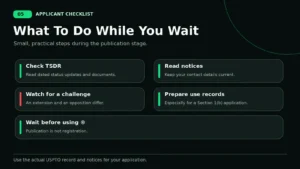
- Watch for the publication date, status, and documents on TSDR.
- Read Notices and update your contact details.
- Keep an eye out for extension or opposition activity. They are not the same events.
- Maintain records of dated uses (if applicable).
- Prepare for a Statement of Use if the application continues to be placed under Section 1(b).
- Wait to claim registration. Publication does not permit the use of ®.
Can I Use the ® Symbol Once My Mark Is Published for Opposition?
No, not just because the app is out! The federal ® symbol is used with the goods/services for which the mark is registered. An application in progress is not eligible. Use ™ for goods, and ℠ for services, to indicate a claim of trademark, even if it has not been federally registered. Use EagleMarkUSA’s TM / SM / ® Symbol Helper. USPTO: Trademark basics
Where Can I Check My Official Trademark Status?
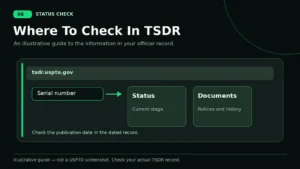
Utilize USPTO’s Trademark Status and Document Retrieval system (TSDR). You will put your application serial number in there and check the Status and Documents tabs. The current status is indicated in Status, and notices and correspondence are in Documents. An isolated label and a 3rd party tracker are not as helpful as the date and history. New documents may not be filed right after filing. USPTO: How to check status
Frequently Asked Questions About Published for Opposition
This is a list of frequently asked questions relating to the Publishing for Opposition process.
Is Published for Opposition a good sign?
Generally, yes. The application passed the examination step and was allowed to be published by the examining attorney. It is pending for public comment; a third party may challenge or ask for an extension of time.
Does Published for Opposition mean my trademark is registered?
No. The trademark has been published in the Trademark Official Gazette, but has not yet received federal registration. An intent-to-use application requires an NOA and a qualifying use filing, and will normally register later as a use-based application.
Does Published for Opposition mean someone opposed me?
No. It refers to the review stage of the public. A Notice of Opposition to the TTAB is actually necessary for a real opposition. An extension request is also not an opposition.
How long does Published for Opposition last?
Generally, the opposition window is 30 days after publication. While the USPTO is working through the subsequent stage or an extension/opposition, the TSDR status can last for a longer period. Look in the dated record.
What happens after the 30-day opposition period?
When no opposition or extension comes in the way, a Section 1(a) application will typically proceed to registration. An application that remains on Section 1(b) always progresses towards an NOA, then towards a Statement of Use or an eligible extension.
Can someone extend the opposition period?
Yes. If someone is interested in opposing the proposed action, they have the opportunity to request an eligible extension before the deadline. This does not necessarily mean that a Notice of Opposition has been filed, but rather it provides more time to consider an opposition.
What happens if nobody opposes?
The USPTO takes the application to the next step. That could be in the form of registration or a Notice of Allowance issued, followed by proof of use. It doesn’t always occur after 30 days.
What happens if someone files an opposition?
A TTAB action starts, and regular registration activities stop. The applicant is required to read the institution order and note the date of application, and view the Notice of Opposition. A loss doesn’t mean an opposition.
What does Approved for Pub – Principal Register mean?
The application has been approved for publication on the Principal Register by the examining attorney. It precedes the actual “Published for Opposition” event. The mark has not been registered, although it is registered on the register.
What is a Notice of Allowance?
For a Section 1(b) application, it refers to the publication phase of the application, and once the use requirements are met, the mark can proceed. The NOA is not a registration; it begins the first six-month Statement of Use or extension period.
How long after publication does a trademark register?
No set time limit. Official notice of registration or the next step can take three to four months according to USPTO guidance. After an intent-to-use application, it must go through a use filing and USPTO review.
Can I use ® while my trademark is published for opposition?
No, this is an application that is pending for publication. Do not use ® before it has been federally registered for the specific goods/services. Before using, you can use ™ or ℠ if it suits your use; see the Symbol Helper.
Conclusion
When you see this message, it’s a good sign — your application has successfully passed the examination for publication and moved on to the public review. It is not a federal registration or opposition that someone has previously opposed you. The first opposition is typically 30 days after the date of the Gazette, and the party may be a third party who opposes or asks for further time.
An application based on use can proceed toward registration, and an intent-to-use application typically proceeds toward a Notice of Allowance and then proof of use. Do not rely on a status changing 30 days after the date of the event or notice; watch for the dated events and notices in TSDR.
Need Help Understanding Your Trademark Status?
To learn more about the application record, notices of opposition, next steps after filing an intent to use, Statement of Use requirements, and the registration process, please contact EagleMarkUSA. An application may be granted or denied registration, and may be granted for registration and issued for public sale at the same time or at separate times.

Pingback: Trademark Opposition: Process, Grounds, Deadlines & Response